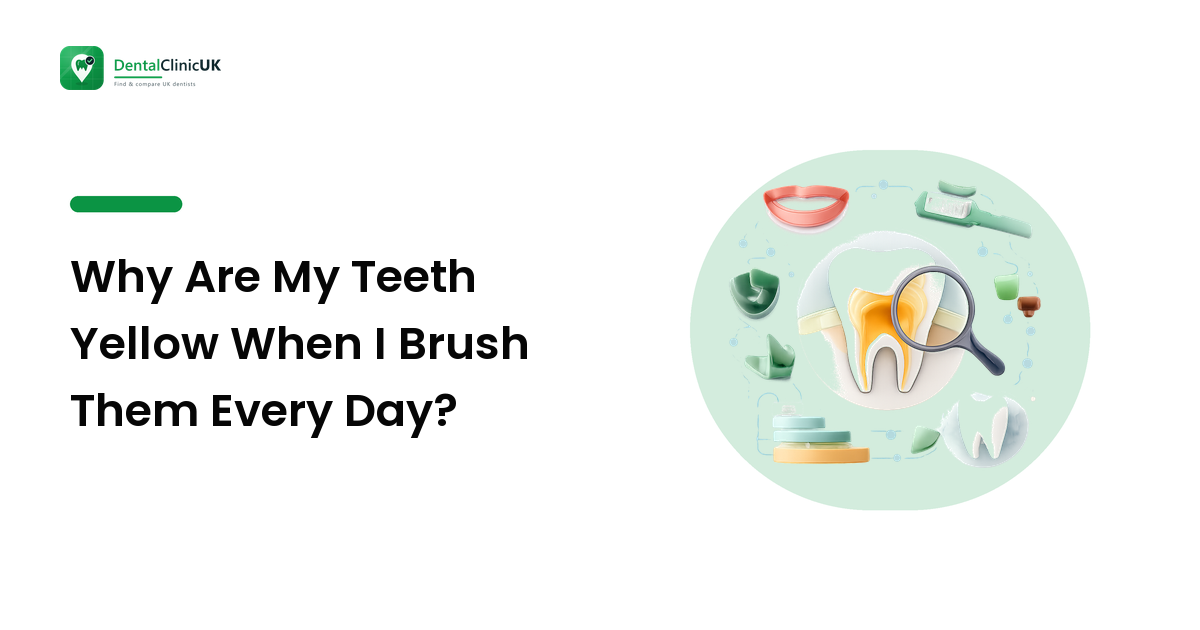
If your teeth look yellow despite a careful, twice-a-day routine, the usual explanation is not that you are brushing badly. It is that most of a tooth's colour does not sit on the surface at all. Enamel, the outer layer, is fairly translucent — closer to frosted glass than to white paint. The layer underneath it, dentine, is naturally creamy-yellow. What you see is dentine showing through enamel, and no amount of brushing changes the colour of a layer you cannot reach.
That single fact explains most of the frustration. Brushing removes plaque and lifts some surface staining, which keeps teeth healthy and stops them looking dull or grubby. It does not lighten the tooth itself, because the tooth itself was never the thing being cleaned.
A quick note: This article is general information only, not a diagnosis or a substitute for professional dental advice. Tooth colour has several possible causes, and only a registered dentist can assess your teeth. If one tooth has darkened, if the colour has changed suddenly, or if you have pain, sensitivity, or bleeding gums, please book an appointment.
What actually makes a tooth look yellow
Think of a tooth as two layers with very different jobs.
Enamel is the hard outer shell. It is not opaque white — it is semi-translucent, and its own colour is closer to a faint bluish-grey. Light passes partly through it.
Dentine sits underneath, making up the bulk of the tooth. It is naturally yellowish, and it is what most of that light meets before bouncing back to your eye.
So the shade of your teeth is really the shade of your dentine, filtered through however much enamel is in front of it. Two things follow from that, and they explain nearly everything people find confusing about tooth colour:
- Thinner or more translucent enamel means a yellower-looking tooth, because more of the dentine shows through.
- Naturally darker dentine means a yellower-looking tooth, however thick and healthy the enamel is.
Enamel thickness and dentine shade are both largely inherited. Some people simply have teeth that photograph warm, and their teeth are no less healthy for it. "Bright white" is not a health measurement.
Why brushing more, or harder, does not make teeth whiter
Brushing does two useful things for appearance: it removes the soft plaque film that makes teeth look dull, and it disturbs surface stain before it settles in. Both matter. Neither reaches dentine.
Worse, the instinctive response — scrubbing harder, or switching to a firmer brush — tends to work against you over time. Hard brushing can wear enamel and encourage gums to recede. Thinner enamel lets more dentine show, and exposed root surfaces are naturally darker than the crown of the tooth, so the visible result of brushing too hard can be a warmer, yellower smile rather than a brighter one.
The same applies to abrasive home remedies. Anything that works by scouring is removing enamel to remove stain, and enamel does not grow back. Gentle brushing with a soft brush and a fluoride toothpaste — the routine covered in our daily oral hygiene routine guide — protects the layer that is keeping your teeth as light as they are.
Is it surface stain, or the natural colour of the tooth?
This is the question worth answering before you spend anything, because the two respond to completely different things. Dentists describe them as extrinsic (on the surface) and intrinsic (within the tooth).
Signs it is mostly surface stain:
- The colour is uneven — heavier in grooves, between teeth, or in a band along the gumline.
- It builds up gradually and looks worse before a hygienist visit and better after one.
- It has an obvious dietary or smoking pattern behind it.
Signs it is mostly the natural shade of the tooth:
- The colour is even, warm, and consistent across every tooth, including the smooth flat surfaces.
- It has been broadly the same for years, or has deepened slowly with age.
- A professional clean makes the teeth feel cleaner without making them noticeably lighter.
Signs to have checked rather than treated: one tooth noticeably darker than its neighbours, a grey or brown patch on a single tooth, white or brown banding across several teeth, or a change in colour that happened quickly. These are worth a dentist's opinion, because they can point to something other than ordinary staining.
What stains the surface of teeth
Surface stain comes mostly from pigments and tannins that bind to the thin protein film covering enamel. Common contributors include:
- Tea, coffee and red wine — tannin-rich and among the most frequent causes.
- Deeply coloured foods — berries, curries, tomato-based sauces, dark fruit juices.
- Smoking and other tobacco use, which stains heavily and quickly.
- Some mouthwashes, notably chlorhexidine, which can cause brown staining with prolonged use. It is usually prescribed for short courses for that reason.
- Iron supplements in liquid form, particularly in children.
Frequency matters more than quantity. Sipping one cup of tea over an hour gives pigment far more contact time than drinking it in ten minutes.
A practical point that surprises people: do not brush immediately after acidic drinks. Enamel is temporarily softened just afterwards, so brushing straight away can wear more than it protects. Rinse with water and wait a while instead.
Why teeth get yellower with age
Age changes tooth colour in two directions at once, which is why the effect is fairly reliable.
Enamel gradually thins through a lifetime of chewing, brushing and dietary acid, so it filters less of the dentine underneath. At the same time, the tooth lays down extra dentine internally over the years, and that added dentine is denser and darker than the original. Less filter in front, more yellow behind.
Gum recession adds to it. As gums move back, the root surface becomes visible, and root surfaces are naturally darker than crowns — which is why teeth often look warmer near the gumline first.
None of this is damage in itself. It is simply the normal ageing of a tooth, and it is the reason people who never changed a habit still notice their smile has warmed over a decade.
What actually changes tooth colour
Three different things, doing three different jobs:
A professional clean removes surface stain, plaque and hardened tartar that home brushing cannot shift. If your yellowing is extrinsic, this can make a visible difference on its own, and it is the cheapest thing to try first.
Whitening works chemically rather than mechanically, lightening the tooth itself rather than scrubbing something off it. This is the option that addresses intrinsic colour, and it is worth understanding the trade-offs — temporary sensitivity is common, existing fillings and crowns do not change shade, and unregulated products carry real risks. Our guide to whether whitening damages your teeth covers what to know before starting.
Whitening toothpaste sits somewhere between the two, and expectations should be set accordingly. Most work by removing surface stain, usually with mild abrasives or stain-dissolving agents, so they can help a stained tooth look cleaner but will not lighten your natural shade. How to read what a toothpaste actually offers is in our guide to choosing a toothpaste.
Sensible habits that protect the colour you have
- Brush gently, twice a day, with a soft brush and a fluoride toothpaste.
- Clean between your teeth daily — staining loves the spots a brush never reaches.
- Have staining drinks with meals rather than sipping them across the day.
- Rinse with water after tea, coffee, or wine, and wait before brushing.
- Keep up regular check-ups and hygienist appointments.
- If you smoke, stopping does more for tooth colour than any product.
When to see a dentist about tooth colour
Book an appointment if a single tooth has darkened, if the colour changed noticeably over weeks rather than years, if there are white or brown patches or bands, or if discolouration comes with sensitivity, pain, or gum problems. It is also worth asking before whitening rather than after: a dentist can tell you whether the cause is surface stain or natural shade, which decides whether whitening is likely to do anything at all for you.
FAQ
Does whitening toothpaste actually whiten teeth?
It generally removes or reduces surface stain rather than changing the natural shade of the tooth. That can make teeth look cleaner and slightly brighter, but if your colour comes from dentine showing through enamel, toothpaste will not change it.
Are yellow teeth unhealthy?
Not necessarily. Natural tooth shade varies a lot between people, and a warm shade with healthy gums and no decay is not a health problem. What matters clinically is the condition of the teeth and gums, not their colour — though a sudden change is worth checking.
Why are my teeth more yellow near the gumline?
Two common reasons. Enamel is thinner near the gum than at the biting edge, so more dentine shows through there. And if gums have receded, the exposed root surface is naturally darker than the crown. Stain and plaque also collect along the gumline, which can add to it.
Can yellow teeth become white naturally?
Surface staining can be reduced by cleaning, better habits, and a professional scale and polish. The tooth's underlying shade cannot be changed by anything you do at home — that requires a whitening treatment, and it is worth discussing with a dentist first.
Why do my teeth look yellower than they did as a child?
Baby teeth are whiter and more opaque than adult teeth, so permanent teeth coming through often look yellow by comparison — that is normal, not a sign of damage. Adult teeth then warm slowly over the years as enamel thins and dentine builds up inside.
Does drinking through a straw help?
It can reduce contact between staining drinks and the front surfaces of your teeth, which may help with extrinsic stain over time. It does nothing for your natural shade, and it is no substitute for rinsing and regular cleaning.
Next step
Teeth that look yellow despite good brushing are usually doing exactly what teeth do: showing you the dentine through the enamel. Cleaning protects them and keeps stain off, but colour is a separate question with separate answers — and the useful first move is finding out which kind of yellowing you actually have. A dentist can tell you that in a single visit, and it saves guessing at products that were never going to work. Speak to the team at Dental Clinic UK.