You spit into the sink, and there it is — a swirl of pink. It is one of the most common things people notice about their mouth, and one of the most commonly ignored, usually because it does not hurt.
Here is the short version, and it is worth sitting with for a moment: healthy gums do not normally bleed when you clean them gently. Bleeding is not a sign that you are brushing wrong so much as a sign that the gum tissue is inflamed and irritated — most often by plaque sitting along the gumline. And the instinctive response, which is to back off and brush that area more lightly or skip it altogether, is usually the opposite of what helps.
A quick note: This article is general information only. It is not a diagnosis and not a substitute for professional dental advice. Gums bleed for many different reasons, and only a registered dentist can assess your own situation. If you have bleeding that does not settle, pain, swelling, or a loose tooth, please book an appointment.
Why gums bleed: what is actually happening
Your gums form a tight seal around each tooth, and just below the surface they carry a dense network of very fine blood vessels.
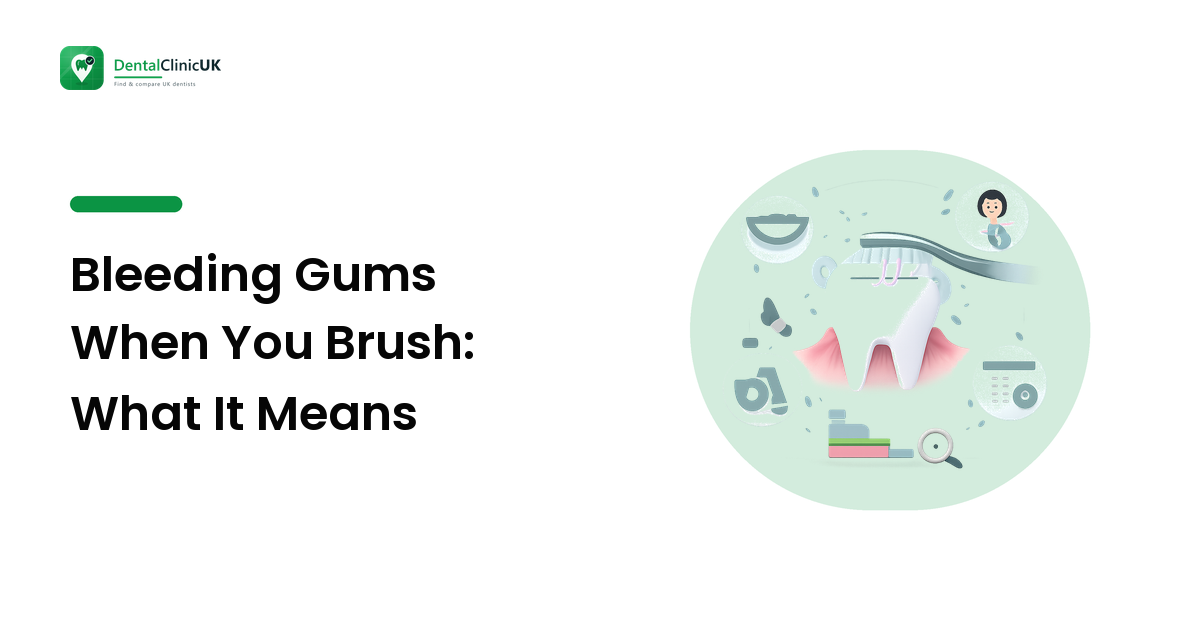
Through the day, a soft, sticky film of bacteria called plaque builds up on your teeth. Where it collects along the gumline — and particularly in the tight spaces between teeth — your body recognises those bacteria and mounts an immune response. That response is inflammation: the small blood vessels in the gum widen, more blood flows to the area, and the tissue becomes swollen, softer and more fragile than usual.
That is the whole mechanism in one sentence. Inflamed gum tissue is engorged and delicate, so the ordinary friction of a toothbrush or a strand of floss — pressure that firm, healthy gum would shrug off entirely — is enough to break the surface and produce blood.
Two things follow from this, and they change how you should read the pink in the sink.
First, bleeding is a location marker. The places that bleed are the places where plaque has been sitting undisturbed. Many people find they always bleed in the same one or two spots — often between the back teeth, or along the inside of the lower front teeth. That is not a coincidence, and it is not random. It is a map of where your cleaning is not quite reaching.
Second, the absence of pain is not reassurance. Gum inflammation is usually painless in its early stages, which is precisely why it can go unnoticed for years. Bleeding is often the only signal the body gives you, and it is a mild one.
Why brushing less is the wrong instinct
When something bleeds, the natural response is to leave it alone and let it heal. With gums, that instinct backfires.
If plaque is irritating the tissue, avoiding that area leaves the plaque exactly where it is. The inflammation continues, the tissue stays fragile, and the next time you touch it, it bleeds again — which reinforces the belief that you should be gentler still. It becomes a loop.
Cleaning the area gently and consistently does the opposite. Remove the plaque every day, and the immune response has nothing left to react to. The blood vessels settle, the swelling reduces, the tissue firms up — and it stops bleeding. For inflammation caught early, this often happens within one to two weeks of genuinely consistent daily cleaning.
The important word is gently. This is not an argument for scrubbing harder. Hard brushing with a stiff brush can itself traumatise the gum and, over time, contribute to gums receding. What clears plaque is contact and consistency, not force: a soft-bristled brush, angled towards where the tooth meets the gum, moved in small circles, for two minutes twice a day. Let the bristles do the work.
The bit almost everyone misses
If you brush twice a day and your gums still bleed, the likeliest explanation is not your brushing. It is that a toothbrush physically cannot reach the surfaces between your teeth, and those surfaces are where gum inflammation most often starts.
Think of each tooth as having five surfaces. A brush cleans three of them well. The two that face the neighbouring teeth are shielded by the contact point, so plaque there sits undisturbed regardless of how thorough your brushing feels. This is why so many people are surprised to find their gums bleed the first few times they use floss or interdental brushes — those areas have been quietly inflamed for a long time, and nothing had reached them until now.
That early bleeding, when you take up cleaning between your teeth, is expected rather than alarming. Keep going gently, and for most people it eases noticeably within a couple of weeks as the tissue recovers. Floss and interdental brushes both work; the better one is whichever you will actually use every day. Interdental brushes come in a range of sizes, and using one that fits properly matters — your dentist or hygienist can point you to the right size, which is a small conversation that makes a real difference.
Our plain-English guide to gum health walks through the full picture of what healthy gums look like and how to look after them.
When plaque hardens, home care cannot fix it
There is a limit to what brushing can undo, and it is worth understanding why.
Plaque that is left undisturbed gradually mineralises and hardens into calculus, often called tartar. Once that happens, it is firmly bonded to the tooth surface and no amount of brushing, flossing or mouthwash will remove it. Worse, its rough surface holds more plaque against the gum, so it keeps the inflammation going.
This is the situation where someone cleans diligently for weeks, sees partial improvement, and reasonably concludes that nothing is working. Often the honest answer is that hardened deposits are still there, and only a dentist or hygienist can remove them. After a professional clean, home care has a fair chance of keeping the gums settled — a more encouraging position than it might sound.
Other things that can affect bleeding gums
Plaque is the usual driver, but it is not the only factor, and a dentist will consider the wider picture:
- Hormonal changes. Pregnancy and other hormonal shifts can make gum tissue respond more strongly to the same amount of plaque, so bleeding may increase even when your routine has not changed.
- Some medicines. Blood-thinning medication, among others, can make bleeding more noticeable. This is a conversation for your dentist and GP, not a reason to stop cleaning or to change any medication yourself.
- Smoking and vaping. Smoking restricts blood flow in the gums, which can mask bleeding — meaning gums may look deceptively calm while problems progress underneath. Less bleeding is not always better news.
- General health. Conditions such as diabetes influence how gums respond to inflammation, and the relationship runs in both directions.
- A new or unusually firm toothbrush. Occasionally the cause really is mechanical. A medium or hard brush, or heavy pressure, can traumatise healthy tissue. A soft brush is the safer default for almost everyone.
None of these are things to self-diagnose. They are simply reasons that two people with similar routines can have quite different gums, and reasons to bring it up at your next appointment rather than to keep guessing.
When to see a dentist
Some bleeding settles with better daily cleaning. Some does not, and the second group deserves a professional look rather than more waiting. Book an appointment if:
- bleeding has not clearly improved after two weeks of gentle, consistent daily cleaning including between the teeth,
- the bleeding is heavy, or happens spontaneously without you touching the gums,
- your gums are painful, swollen, or feel tender to eat with,
- your gums seem to be shrinking back and your teeth look longer,
- you have persistent bad breath or a bad taste that will not shift,
- any tooth feels loose or has moved,
- or you are pregnant, taking blood-thinning medication, or managing a condition such as diabetes, in which case earlier advice is sensible rather than cautious.
Untreated gum inflammation does not always stay mild. Left long enough, it can progress to affect the deeper tissue and bone that hold teeth in place, and that stage needs professional management. Catching it while it is still just pink in the sink is by far the easier path.
FAQ
Why do my gums bleed when I brush but not when I eat?
A toothbrush applies direct, targeted pressure right at the gumline, which is exactly where inflamed tissue is most fragile. Food generally does not contact that margin the same way. So brushing tends to reveal inflammation that eating does not — it is the brush finding the problem, not causing it.
Should I stop brushing the area that bleeds?
Generally no, and this is the single most common mistake. If plaque is causing the irritation, avoiding the area lets it continue. Keep cleaning that spot gently and thoroughly every day. If it is still bleeding after about two weeks, that is your cue to see a dentist rather than to keep waiting.
How long should it take for bleeding gums to stop?
For inflammation caught early, many people see a clear improvement within one to two weeks of genuinely consistent gentle brushing and daily cleaning between the teeth. If there is no real change in that time, something else is likely involved — often hardened tartar that only a professional clean can remove.
Can mouthwash stop my gums bleeding?
Mouthwash can support a good routine, but it does not physically remove plaque from the tooth surface, and that removal is what settles the gums. Treat it as an extra rather than a replacement for brushing and cleaning between the teeth. Some antibacterial mouthwashes are recommended by dentists for short-term use in specific situations, which is a decision to make with them.
Is bleeding when I floss for the first time normal?
It is very common. Those surfaces have often gone uncleaned for a long time, so the gum there is inflamed and bleeds on first contact. Continue gently and daily, and for most people it eases within a couple of weeks. If it does not, or if it is heavy or painful, have it checked.
Next step
Bleeding gums are common, usually painless, and easy to dismiss — but they are your mouth telling you something specific and useful: plaque is sitting somewhere it should not be. Clean gently along the gumline and between your teeth every day, give it a fortnight, and see what changes.
If the bleeding does not settle in that time, or if anything about your gums is worrying you, do not sit on it. A registered dentist can assess your own situation, remove anything home care cannot shift, and tell you where you actually stand. To find and compare NHS and private dentists near you, start at Dental Clinic UK.