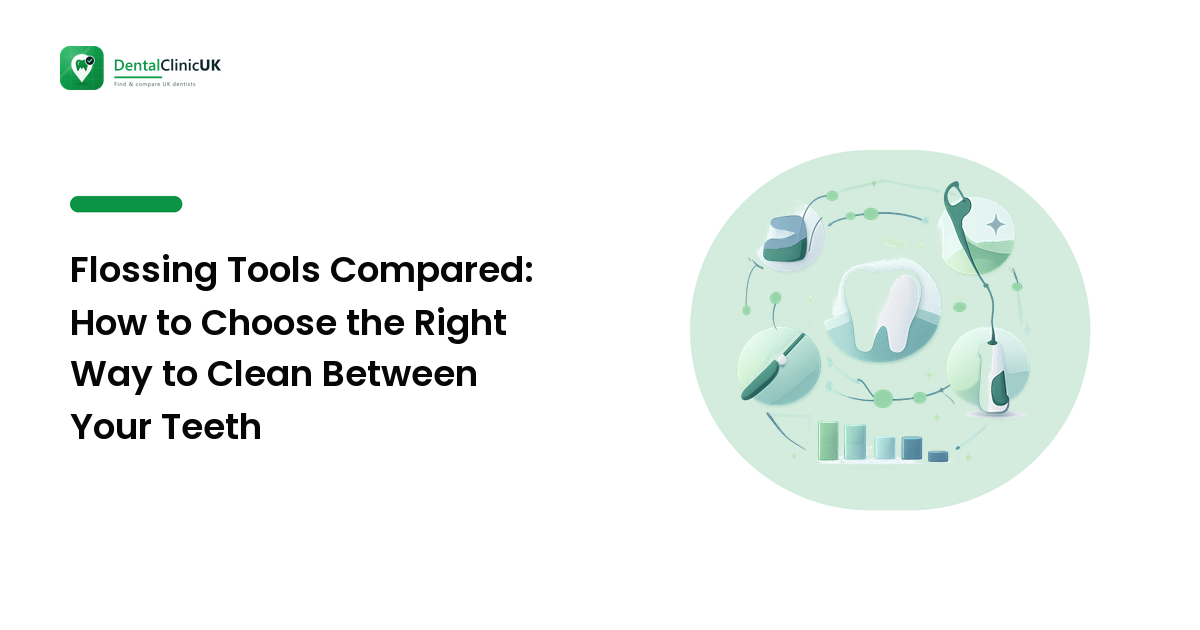
The best flossing tool is the one you will use every day. String floss suits tight gaps, interdental brushes suit slightly wider spaces and are often easier to handle, floss picks are handy on the go, and water flossers can help around braces or bridges. Most people do well with floss or interdental brushes; your dentist can confirm what fits your mouth.
A quick note: This article is general information only. It is not a diagnosis or a substitute for professional dental advice. If you have pain, swelling, ongoing bleeding, or any concern about your mouth, please see a registered dentist who can assess your individual situation.
Why does cleaning between your teeth matter so much?
A toothbrush is very good at the fronts, backs and biting surfaces of your teeth — and not good at all at the narrow surfaces where two teeth touch. Those contact points are sheltered, so plaque can sit there undisturbed. That is why cleaning between your teeth is treated as a separate daily job rather than an optional extra, and why it sits alongside brushing in our daily oral hygiene routine guide.
Keeping those spaces clean supports the gums that hold your teeth in place, and it also helps with everyday freshness, since trapped food debris is a common contributor to odour. Our guide to bad breath causes covers that side of things in more detail.
The general advice is straightforward: clean between your teeth once a day, using whichever tool reaches your gaps comfortably.
What are the main flossing tools, and how do they compare?
There is no single winner. Each tool has a shape of gap and a set of hands it suits best.
| Tool | Best suited to | Strengths | Things to consider |
|---|---|---|---|
| String floss (waxed or unwaxed) | Tight contacts where nothing else fits | Inexpensive, thorough, reaches tight gaps, easy to carry | Takes practice; awkward at the back of the mouth |
| Interdental brushes | Small to wider gaps, gum recession, bridges | Easy to hold, quick, many people clean more effectively with them | Must be the right size — too big can irritate gums, too small does little |
| Floss picks / harps | Convenience, on the go, teaching children | Simple one-handed use, good for beginners | Harder to curve around each tooth; single-use plastic waste |
| Water flossers (oral irrigators) | Braces, implants, bridges, dexterity difficulties | Gentle, easy to use, reaches hardware well | Bulkier and pricier; usually an addition to, not a swap for, floss or brushes |
| Interdental sticks (soft picks) | Larger gaps, quick clean-ups | Gentle and simple | Less thorough than a properly sized brush |
If you have crowns, bridges, implants or orthodontic wires, ask your dental team which of these they recommend for your setup — hardware changes the shape of the spaces you are trying to clean.
How do you choose the right tool for your mouth?
Work through these steps rather than buying the most advertised option.
- Look at your gaps. If floss barely slides through, your contacts are tight and string floss is likely the practical choice. If you can see or feel visible spaces, interdental brushes usually clean them better.
- Get the size right. Interdental brushes come in a range of sizes, and many people need more than one size for different parts of the mouth. A brush should slide in with light resistance, never be forced.
- Be honest about dexterity. If reaching the back teeth with floss is a struggle, a floss holder, interdental brush or water flosser will beat perfect-in-theory floss you never use.
- Factor in braces or bridgework. Threader floss, interdental brushes and water flossers are all commonly used around fixed appliances.
- Try one for two weeks. Habits form through repetition. Judge a tool on whether it is still in use a fortnight later.
- Ask at your next check-up. A dentist or hygienist can look at your gaps and show you the technique on your own teeth, which is far more useful than any written description.
How should you use these tools gently?
Technique matters more than force with every one of them.
- String floss: use a decent length, wind it around your fingers, and guide it down slowly rather than snapping it into the gum. Curve it into a C-shape against the side of one tooth, move it up and down, then repeat against the neighbouring tooth. Use a fresh section as you work around.
- Interdental brushes: insert straight in, without forcing, and move gently in and out a few times. If a brush bends or hurts, it is too big for that gap.
- Floss picks: the same principle — guide, do not snap, and try to hug each tooth surface rather than only pushing straight down.
- Water flossers: aim the tip at the gumline and trace along it, pausing briefly between teeth. Lean over the sink; it is a messy first attempt for everyone.
Some bleeding when you first start cleaning between your teeth is common and often settles within a week or two as gum health improves. If bleeding continues beyond that, is heavy, or comes with pain or swelling, book an appointment — our gum health guide explains what bleeding gums can and cannot tell you.
Does the order matter — floss before or after brushing?
Either order is widely considered acceptable, and consistency matters more than sequence. Some people prefer to clean between the teeth first so that fluoride toothpaste can then reach the freshly cleared spaces. Others find it easier to floss last thing at night as a wind-down step. Pick whichever version you will repeat.
Two habits are worth pairing with it: brush for two minutes twice a day with a fluoride toothpaste, and spit rather than rinse afterwards so a little fluoride stays on your teeth.
What about mouthwash, and do gadgets replace the basics?
Mouthwash can be a pleasant extra, but swilling liquid does not physically disturb plaque between teeth the way floss or an interdental brush does. If you use a fluoride mouthwash, using it at a different time from brushing avoids washing away the concentrated fluoride your toothpaste just left behind.
The same logic applies to gadgets in general. A water flosser is a genuinely useful tool for the right person — someone with braces, bridges, implants or limited dexterity — but for most people with healthy, tight-fitting teeth it works best as an addition to floss or interdental brushes rather than a replacement for them. Spending more does not automatically clean more.
When should you see a dentist rather than change tools?
New equipment will not fix a problem that needs professional attention. Book an appointment if you notice persistent bleeding, gums that are sore, swollen or receding, teeth that feel loose, a bad taste or smell that will not shift, or food that repeatedly packs into the same spot — the last of these can point to something a dentist should look at.
Seek urgent dental care straight away for severe pain, facial or gum swelling, or any injury to your teeth or mouth. If you cannot reach your own practice, NHS advice services can point you to urgent care in your area. NHS charges and how dental services are arranged differ across England, Scotland, Wales and Northern Ireland and change over time, so check current NHS guidance or ask your practice directly rather than relying on figures you read online.
FAQ
Are interdental brushes better than floss?
Neither is universally better. Interdental brushes tend to clean small and medium gaps more effectively and many people find them easier to handle, while floss reaches contacts too tight for any brush. Your gap sizes decide it, and your dentist can advise.
How often should I clean between my teeth?
Once a day is the usual general guidance. Doing it well once beats a rushed attempt twice.
Is a water flosser enough on its own?
For most people it is best treated as an addition rather than a replacement, because the physical wiping action of floss or an interdental brush disturbs plaque in a way a jet of water may not fully match. It can be particularly helpful around braces, bridges and implants.
My gums bleed when I floss — should I stop?
Usually not. A little bleeding when starting a new cleaning habit often settles within a week or two. If it carries on, worsens, or comes with pain or swelling, see a dentist rather than simply stopping.
Do children need to clean between their teeth?
Once a child's teeth are touching, the surfaces between them need cleaning too. Young children need an adult to help, and your dentist can suggest the right tool and timing for your child's stage.
Next step
Choose one tool that genuinely fits your gaps, keep it somewhere you will see it, and use it once a day for two weeks — that is usually long enough for it to stop feeling like a chore. Then bring it up at your next check-up so your dentist or hygienist can watch your technique and confirm the sizes suit your mouth. If you are still looking for a practice, you can find and compare dentists near you.