Few phrases in dentistry cause as much dread as "you might need a root canal", and most of that dread comes from stories rather than experience. It's worth knowing what the treatment is actually for and what it involves, because the reputation belongs to an earlier era of dentistry — and because the pain people associate with it is usually the pain that brought them in, not the treatment itself.
This is a general explanation, not advice about your tooth. Only a dentist who has examined and X-rayed the tooth can say what it needs.
What a Root Canal Is Actually Treating
Inside every tooth, beneath the hard enamel and dentine, is a soft core called the pulp — nerves, blood vessels, and connective tissue — running down through the centre of the root. Root canal treatment (your dentist may call it endodontic treatment) is what's done when that pulp becomes irreversibly inflamed or infected.
That can happen for several reasons: decay that has reached deep enough to involve the pulp, a crack or fracture, an injury to the tooth, or repeated dental work on the same tooth over the years. Once the pulp is beyond recovering, the problem doesn't resolve on its own — infection inside the root has nowhere to drain and can spread into the bone around the root tip, which is where an abscess comes from.
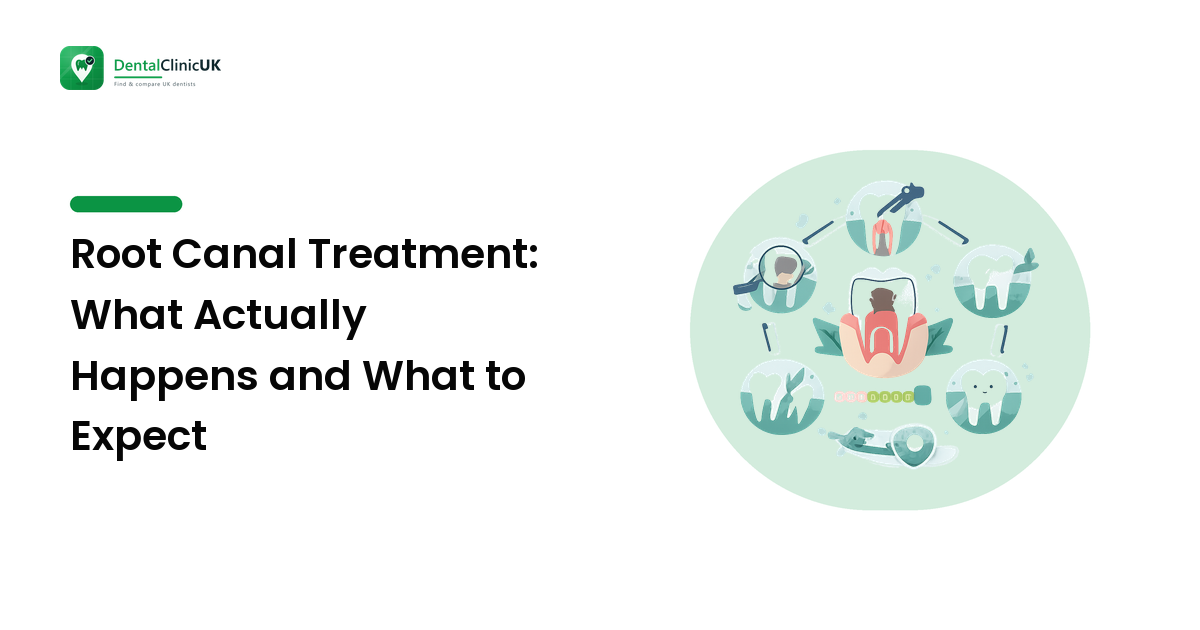
The aim of treatment is straightforward: remove the damaged pulp, clean and shape the canals it occupied, fill and seal them, and then restore the tooth so it can go back to work. The tooth stays; the infected tissue goes.
Signs That Bring People In
None of these means you need a root canal — several have other explanations, and some teeth needing treatment cause no symptoms at all and are picked up on a routine X-ray. But these are the things that commonly prompt an appointment:
- Persistent, spontaneous toothache, or pain that wakes you at night
- Lingering pain to hot or cold that continues well after the trigger has gone
- Pain on biting or when pressure is applied to one tooth
- A tooth that has darkened compared with its neighbours
- Swelling or tenderness in the gum near a tooth, or a small pimple-like spot on the gum
- Swelling of the face or jaw, which should be treated as urgent
Swelling that is spreading, difficulty swallowing or breathing, or feeling unwell with a fever alongside dental pain needs same-day urgent care. Our guide to toothache covers what counts as a dental emergency and how to get seen quickly.
What Happens During Treatment
The exact sequence varies by tooth and by dentist, but the shape of it is consistent.
Assessment. The dentist examines the tooth, takes X-rays to see the root and surrounding bone, and often tests how the tooth responds to cold or to tapping. The number of canals differs by tooth — front teeth typically have one, back teeth several — which is part of what determines how long treatment takes.
Anaesthetic. The area is numbed. This matters because it's the source of most of the fear: with effective local anaesthetic, the procedure itself is generally described as pressure and vibration rather than pain. Tell your dentist if you're anxious or if you've had trouble getting numb before — there are options, and they'd rather know beforehand.
Isolation. A small sheet called a rubber dam is usually placed over the tooth. It keeps the tooth dry and stops anything entering your mouth. It looks odd and feels strange for a minute; it substantially improves the outcome.
Cleaning and shaping. The dentist makes an opening in the top of the tooth, removes the damaged pulp, and cleans the canals with fine instruments and disinfecting solutions. This is the part that takes the time.
Filling and sealing. Once clean and dry, the canals are filled with a rubber-like material and sealed so bacteria can't re-enter.
Restoring the tooth. The access hole is filled. Back teeth in particular often need a crown or onlay afterwards, because a tooth that has had root canal treatment has less structure left and can be more prone to fracture. This restoration is a genuinely important part of the outcome — not an optional extra — and it may be a separate appointment and a separate cost.
Treatment may be completed in one visit or spread across two, sometimes with a temporary dressing in between. Neither approach is inherently better; it depends on the tooth, the infection, and the dentist's assessment.
Afterwards
Expect the tooth and the surrounding gum to feel tender for a few days, particularly when biting. That usually settles steadily. It's common to be advised to avoid chewing on that side until the permanent restoration is in place, especially if there's a temporary filling.
Ask your dentist what pain relief is appropriate for you, and follow the packaging or their instructions — this article can't give dosing guidance. Contact the practice if pain is severe, worsening after the first few days, or accompanied by swelling.
Longer term, a root-treated tooth still needs everything a normal tooth needs: brushing, cleaning between the teeth, and regular check-ups so the restoration and the surrounding bone can be monitored. The tooth no longer has a living pulp, so it won't warn you with sensitivity if something develops — which is exactly why the routine check-up interval your dentist sets matters more, not less.
Root Canal or Extraction?
This is the real decision most people are facing, and there's no universal answer. Broadly, the considerations are:
In favour of keeping the tooth: nothing replaces a natural tooth exactly. Keeping it maintains the bite, stops neighbouring teeth drifting, and avoids the separate question of how to replace a gap — which, if you choose to, means an implant, bridge, or denture, each with its own cost and maintenance.
In favour of extraction: if the tooth is badly broken down, cracked below the gum, or has too little structure left to restore, treatment may not have a good outlook. Extraction is usually quicker and cheaper up front — though replacing the tooth afterwards often isn't.
The honest position is that this depends on the specific tooth: how much structure remains, the state of the bone around it, whether it's been treated before, and your own priorities. Ask directly: what's the likely outlook for this tooth if we treat it, and what would replacing it involve if we don't?
Costs in the UK
Two routes, and they're priced completely differently.
NHS dentistry uses fixed charge bands rather than per-procedure pricing, so a course of treatment falls into a band regardless of how many fillings or appointments it includes. Root canal treatment and crowns sit in different bands from a simple examination. Band charges are set nationally and change periodically, and some patients are exempt from charges — check the current bands and exemption criteria on the NHS website rather than relying on a figure quoted anywhere else.
Private dentistry is priced per treatment and varies widely by tooth, by practice, and by whether a specialist (an endodontist) does the work. Molars have more canals and take longer, so they generally cost more than front teeth. Always ask for a written treatment plan with costs before starting, and check whether the crown or other restoration is included in the quoted figure — often it isn't.
Our NHS vs private comparison goes through how to think about the choice more broadly.
Frequently Asked Questions
Is a root canal painful? The procedure is carried out under local anaesthetic and is usually described as pressure rather than pain. Much of the pain people associate with root canals is the toothache that led to treatment. Tell your dentist if you feel discomfort during the appointment — more anaesthetic can be given.
How long does root canal treatment take? Commonly one or two appointments, each often around an hour or more, depending on the tooth and how many canals it has. Your dentist will tell you what to expect for your tooth.
How long does a root-treated tooth last? Many last for years when the treatment is well sealed, the tooth is properly restored — often with a crown on back teeth — and oral hygiene is good. Outcomes vary by tooth and situation, so ask your dentist about the outlook for yours specifically.
Can a root canal fail? Yes, and it can be re-treated, or in some cases treated with a small surgical procedure at the root tip. Persistent or returning pain, or swelling, is a reason to go back rather than wait.
Is it better to just have the tooth out? Sometimes extraction is the right call — usually when too little sound tooth remains. But replacing a missing tooth has its own costs and considerations, so compare the whole picture, not just the price of the first appointment.
Can I go to work afterwards? Most people do, once the numbness wears off. You may prefer to avoid an important meeting immediately after, since one side of your face will be numb for a couple of hours.
The Reputation Is Out of Date
A root canal is a repair, not a punishment — the alternative to losing the tooth, done under anaesthetic, with a restoration afterwards to keep it working. If it's been suggested to you, the useful next step is a conversation with your dentist about the outlook for that particular tooth and what it will cost end to end, including the crown.
If you don't currently have a dentist, or want a second opinion before committing, find a dentist near you on Dental Clinic UK.