Few pains grab your full attention quite like a toothache. It can build slowly over a day or arrive as a sudden throb that keeps you awake, and because it sits right in the middle of your face it is very hard to ignore. The reassuring part is that most toothache has a clear, treatable cause. The important part is that toothache is almost always a signal worth listening to — it rarely fixes itself, and the sooner the cause is found, the simpler the fix usually is.
The short version: home care can take the edge off the pain while you arrange to be seen, but it does not treat what is causing it. Painkillers and gentle measures buy you comfort; a dentist deals with the source. This guide explains, in plain English, what different kinds of toothache can mean, what you can sensibly do at home, and the warning signs that mean you should be seen quickly rather than waiting.
A quick note: This article is general information only and is not a diagnosis, a treatment recommendation, or a substitute for professional dental advice. Toothache can have many causes, and only a registered dentist can examine your mouth and tell you what is going on. If your pain is severe, spreading, or comes with facial swelling or fever, seek urgent care rather than relying on self-help.
What toothache is actually telling you
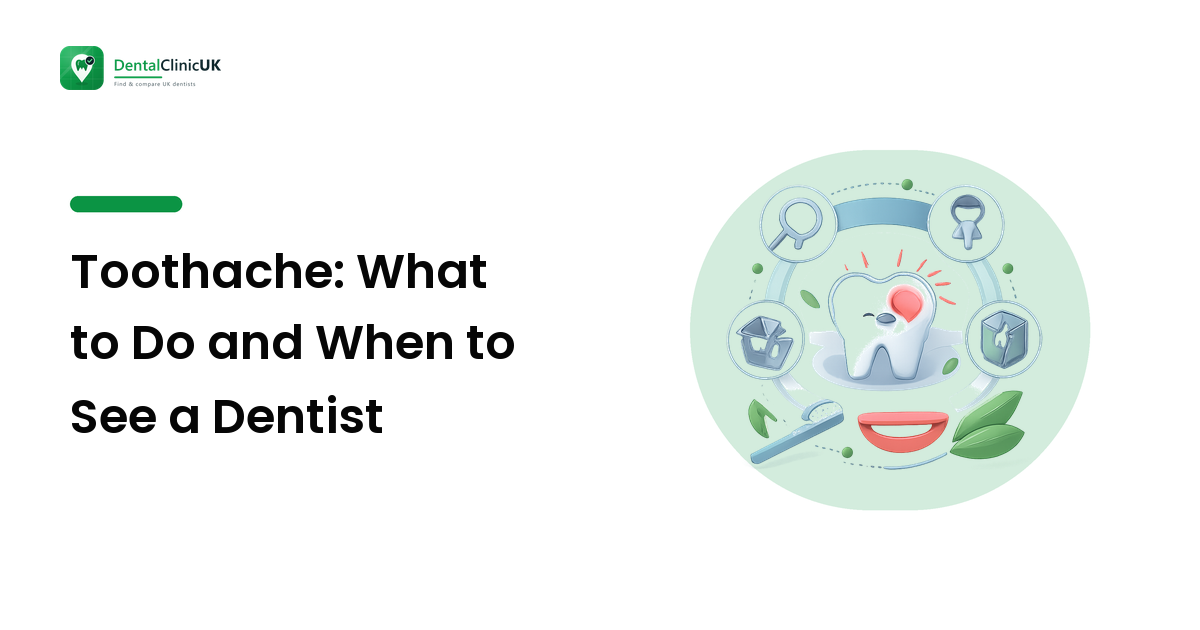
Pain in or around a tooth is your body flagging that something needs attention. Inside each tooth is a soft core of nerves and blood vessels called the pulp, and when that pulp is irritated or inflamed — by decay, a crack, an exposed surface, or infection — it lets you know. The character of the pain often hints at what is going on, which is useful for describing it to your dentist even though it is not a diagnosis.
- A brief, sharp twinge from cold, sweet, or hot things that fades quickly is often ordinary sensitivity rather than a deeper problem. Our guide to tooth sensitivity covers this pattern in detail.
- A dull, lingering ache that hangs around after the trigger has gone can suggest the pulp is more inflamed, sometimes from a larger cavity.
- A sharp pain when you bite down can point to a cracked or damaged tooth, or a filling that needs attention.
- A deep, throbbing, constant pain, especially one that wakes you at night or comes with swelling, can be a sign of infection and generally needs prompt professional care.
- Pain around the gum or the back of the mouth, sometimes with tenderness or a bad taste, can involve the gums or a wisdom tooth coming through.
None of these is a self-diagnosis — the same symptom can have different causes, and only an examination can tell them apart. But noting how your pain behaves helps your dentist get to the answer faster.
Common causes, in plain English
Most toothache traces back to a handful of everyday culprits. Tooth decay is the classic one: when a cavity works through the enamel toward the nerve, the tooth becomes painful, particularly with sweet or cold things. A cracked or chipped tooth can hurt when you bite because the crack flexes under pressure. A lost or loose filling can leave a sensitive surface exposed. Gum problems can make teeth ache or feel tender. An abscess — a pocket of infection at the root or in the gum — tends to cause severe, throbbing pain and sometimes swelling, and always needs professional treatment. And wisdom teeth pushing through can cause soreness at the back of the mouth. The common thread is that these are physical problems inside the mouth, which is why home remedies soothe but do not cure them.
Sensible ways to ease toothache at home
While you wait to be seen, the goal is comfort, not a cure. A few low-risk measures tend to help most people:
- Over-the-counter painkillers. Everyday pain relief such as paracetamol or ibuprofen can take the edge off. Always follow the instructions on the packet, do not exceed the stated dose, and check with a pharmacist if you are unsure whether something suits you — this article cannot advise on medicines for your own situation.
- Rinse gently with warm salty water. A little salt dissolved in warm water, swished around and spat out, can soothe an irritated area. It is a comfort measure, not a treatment.
- Keep the area clean. Carry on brushing gently, even if the tooth is tender, and clean carefully around it. Trapped food can make things worse, so gentle flossing can sometimes bring relief if debris is the issue.
- Try a cold compress. Holding a cool pack against your cheek — not directly on the tooth — can ease swelling and dull the ache.
- Mind your triggers. If cold, hot, sweet, or hard foods set it off, steer clear of them for now, and try chewing on the other side.
A few things are worth avoiding. Do not place an aspirin tablet directly against the gum or tooth — it does not work that way and can burn the soft tissue. Be wary of poking at the tooth with anything sharp. And resist the temptation to keep testing the pain with cold water, which only aggravates it.
When to see a dentist — and when it is urgent
Here is the key message: toothache is a reason to book a dental appointment, not a problem to manage indefinitely at home. Even if painkillers settle it, the underlying cause — a cavity, a crack, an infection — is still there and will usually return, often worse. As a general rule, arrange to see a dentist if a toothache lasts more than a day or two, keeps coming back, or is more than mild.
Some signs mean you should seek care urgently rather than waiting for a routine slot:
- facial or jaw swelling, or swelling around the eye,
- a fever or feeling generally unwell alongside the pain,
- severe pain that is not controlled by over-the-counter painkillers,
- pain that comes with a bad taste, discharge, or a spreading ache,
- difficulty swallowing or breathing — this is an emergency and needs immediate medical help.
These can be signs of a spreading infection, which is not something to ride out at home. If you cannot reach your own dentist, look for an urgent or emergency dental service in your area, and in the UK you can also call NHS 111 for advice on where to go. Seeing someone sooner almost always means simpler, gentler treatment than leaving it.
Preventing the next one
Once a toothache has settled, prevention is the quiet hero. Most of the causes above are far less likely when teeth and gums are looked after day to day: brushing twice a day with a fluoride toothpaste, cleaning between the teeth, easing off on frequent sugary snacks and drinks, and — crucially — not skipping regular check-ups. A dentist can spot a small cavity or an early crack long before it reaches the nerve and starts to hurt, which is exactly the point of going before anything aches. Our guide to how often to have a dental check-up explains how to judge the right interval for you.
Frequently asked questions
How can I stop a toothache fast at home?
You can ease the pain, though not cure it. Over-the-counter painkillers taken as directed, a gentle warm salt-water rinse, a cold compress against the cheek, and avoiding hot, cold, or sweet triggers all tend to help in the short term. These are comfort measures to get you through until you can see a dentist, who needs to treat the actual cause.
Will a toothache go away on its own?
Occasionally the pain eases for a while, but the cause — usually decay, a crack, or infection — does not disappear, and the ache tends to return, often worse. Because of this, toothache is best treated as a prompt to book a dental appointment rather than something to wait out.
When is a toothache an emergency?
Seek urgent care if you have facial or jaw swelling, a fever, severe pain that painkillers do not control, or a spreading ache with a bad taste. Difficulty swallowing or breathing is a medical emergency. These can point to a spreading infection that needs prompt professional treatment.
Why does my toothache hurt more at night?
Many people find pain feels worse lying down, partly because more blood flows to the head and can increase pressure around an inflamed tooth, and partly because there are fewer distractions at night. Keeping your head slightly raised can sometimes help, but persistent night pain is a good reason to see a dentist.
Is throbbing tooth pain always an infection?
Not always, but a deep, constant, throbbing pain — especially with swelling or one that wakes you — is a common sign of infection and should be checked promptly. Only a dentist can confirm the cause, so it is not something to diagnose or treat yourself at home.
Next step
Toothache is common, usually treatable, and almost always worth acting on rather than enduring. Ease the pain sensibly at home if you need to, stay alert to the red flags that call for urgent care, and — whatever the cause turns out to be — get the tooth looked at so the problem is fixed rather than merely quietened. If a tooth is hurting or you are overdue a check, book an appointment with the team at Dental Clinic UK.