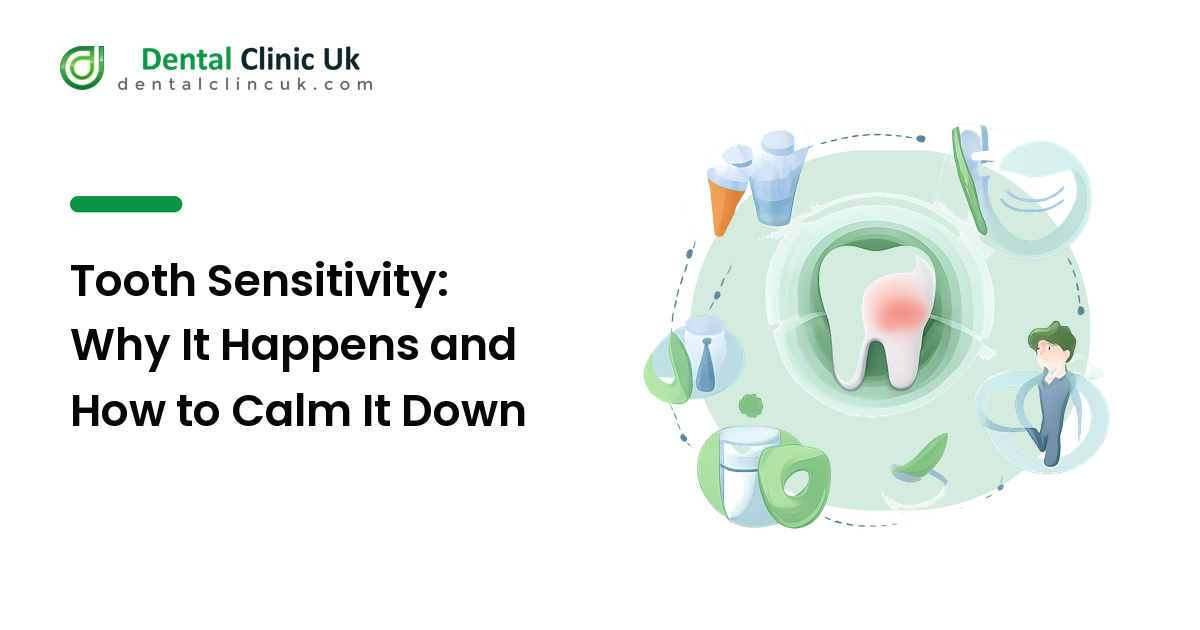
That sharp, sudden twinge when you sip something cold, bite into ice cream, or breathe in chilly air is one of the most common dental complaints there is. Tooth sensitivity is rarely dangerous in itself, but it is genuinely uncomfortable, and the frustrating part is that some of the things people do to fix it can quietly make it worse. This guide explains, in plain English, what sensitivity is, why it happens, and the gentle, sensible habits that tend to calm it down.
The short version: sensitivity usually comes from the protective outer layers of the tooth being worn or the gumline receding, which exposes the softer, more sensitive part underneath. The two habits that help most are brushing gently rather than hard, and giving a sensitivity toothpaste time to work. The thing that surprises people most is that scrubbing harder — the instinctive response — is one of the things that can cause sensitivity in the first place.
A quick note: This article is general information only and is not a diagnosis or a substitute for professional dental advice. Tooth sensitivity can have many causes, and only a registered dentist can assess your individual situation. If your sensitivity is severe, getting worse, focused on a single tooth, or comes with pain, swelling, or other symptoms, please book an appointment.
What sensitivity actually is
A tooth has a hard outer shell of enamel on the crown and a layer called cementum protecting the root near the gum. Underneath both sits dentine, a softer layer threaded with thousands of microscopic channels that lead toward the nerve inside the tooth. When enamel wears thin or the gum recedes and exposes the root, those channels become open to the outside world. Cold, hot, sweet, or acidic things can then reach the nerve more easily, and you feel it as a quick, sharp twinge that fades soon after the trigger goes away.
That "quick and sharp, then gone" pattern is typical of general sensitivity. A different pattern — a deep, lingering, or throbbing ache, or pain that stays on one tooth — is the kind of thing worth having a dentist look at, because it can point to something other than ordinary sensitivity.
Why it happens: the common causes
Several everyday things can expose or wear those vulnerable layers. Knowing them helps you spot what might be at play for you.
- Brushing too hard, or with a hard brush. Aggressive scrubbing can wear enamel over time and push gums back, exposing sensitive root surfaces. This is the big, fixable one.
- Gum recession. As gums recede — through brushing habits, age, or gum problems — the unprotected root becomes exposed.
- Acidic food and drink. Frequent fizzy drinks, citrus, and other acids can soften and gradually erode enamel.
- Tooth grinding. Clenching or grinding, often at night, can wear down enamel and stress teeth.
- After certain dental treatments. Some sensitivity after a filling, a clean, or whitening is common and usually settles on its own over days to a few weeks.
- A cracked tooth, a cavity, or a worn filling. These can cause sensitivity too, which is one reason persistent or one-tooth sensitivity is worth getting checked rather than just treating at home.
The non-obvious trap: brushing harder makes it worse
Here is the part that catches people out. When teeth feel sensitive, the instinct is often to clean more vigorously — as if scrubbing harder will sort it. But hard brushing is one of the causes, not a cure. Pressing firmly and using a stiff brush can wear enamel and nudge the gums back further, exposing more of the sensitive surface and deepening the problem you are trying to solve.
The gentler approach genuinely works better. A soft-bristled brush, light pressure, and small movements clean just as effectively without the wear. A useful trick: hold your toothbrush like a pen rather than gripping it in your fist — it naturally lightens your pressure. And it is generally suggested to wait a little while before brushing after acidic food or drink, because enamel is temporarily softened just after, and brushing immediately can scrub away more than it protects.
Gentle ways to calm sensitivity at home
For everyday sensitivity, a few simple, low-risk habits tend to help over time:
- Switch to a sensitivity toothpaste and be patient. These are widely available and work by helping to soothe or block those tiny channels to the nerve. The key is consistency — they typically need to be used regularly over a couple of weeks or more before you feel the full benefit, so do not give up after a few days.
- Brush gently with a soft brush. As above, light pressure protects rather than wears.
- Ease off on acidic foods and drinks, or have them with meals rather than sipping them throughout the day, to give enamel a break.
- Don't brush straight after acidic things. Rinse with water and wait a while first.
- Mention it at your next check-up. Even mild sensitivity is worth flagging, because a dentist can check for a cause and suggest options.
A small practical tip some people find helpful: smearing a little sensitivity toothpaste onto the sensitive area and leaving it rather than rinsing straight away can give it more contact time — though if in doubt, follow the product instructions or ask your dentist.
These habits sit naturally inside a sound daily routine, which our oral hygiene routine guide covers in full.
When to see a dentist
Home care suits mild, general sensitivity. Some patterns, though, are better assessed by a professional. It is sensible to book an appointment if your sensitivity:
- is severe, or steadily getting worse,
- is focused on one particular tooth rather than generally felt,
- lingers as a deep or throbbing ache rather than a brief twinge,
- comes with pain, swelling, a bad taste, or any sign of infection, or
- does not improve after a few weeks of gentle care and sensitivity toothpaste.
These can be signs of something a dentist should look at, such as a cavity, a cracked tooth, an exposed nerve, or gum issues — none of which a toothpaste alone will fix. Seeing someone sooner usually means simpler treatment.
Frequently asked questions
Why are my teeth suddenly sensitive to cold?
Cold sensitivity usually means the softer dentine layer under your enamel has become exposed — often through enamel wear, gum recession, or brushing too hard — so cold can more easily reach the nerve. A brief twinge that fades is typical of general sensitivity. If it is severe, lingering, or on one tooth, it is worth seeing a dentist to rule out a cavity or crack.
Does sensitivity toothpaste really work?
Many people find it helps, but it is not instant. These toothpastes work gradually by soothing or blocking the tiny channels that lead to the nerve, and they generally need regular use over a couple of weeks or more before you feel the full effect. Consistency matters more than quantity, so keep using it daily rather than expecting overnight relief.
Can brushing harder fix sensitive teeth?
No — and it often makes things worse. Hard brushing can wear enamel and push the gums back, exposing more of the sensitive surface. Gentle brushing with a soft brush cleans just as well without the damage. Holding the brush like a pen helps keep the pressure light.
Is tooth sensitivity something to worry about?
Mild, brief sensitivity is very common and usually not serious. It becomes worth checking when it is severe, worsening, focused on one tooth, lingers as a deeper ache, or comes with pain or swelling. Those patterns can point to a cavity, crack, or gum problem that a dentist should assess, so do not just treat them at home.
How long does sensitivity after a filling or cleaning last?
Some sensitivity after a filling, a professional clean, or whitening is common and usually settles within days to a few weeks as the tooth recovers. If it is severe, gets worse instead of better, or carries on beyond that, contact your dentist, as it may need a quick check.
Next step
Tooth sensitivity is common, usually manageable, and often eased by doing less rather than more — brushing gently, going easy on acids, and giving a sensitivity toothpaste time to work. Just remember the warning signs: sensitivity that is severe, worsening, stuck on one tooth, or lingering as a deeper ache deserves a professional look. To keep an eye on your teeth and gums and catch any cause early, book a routine check-up with the team at Dental Clinic UK.